There is always much to learn from quotes and their historical significance. Read on for a collection of quotes and general history from September 1st – 7th.
September 1, 1939
“There is a hush over all Europe, nay, over all the world…. Alas! it is the hush of suspense, and in many lands it is the hush of fear. Listen! No, listen carefully, I think I hear something—yes, there it was quite clear. Don’t you hear it? It is the tramp of armies crunching the gravel of the paradegrounds, splashing through rain-soaked fields, the tramp of two million German soldiers and more than a million Italians—”going on maneuvers”—yes, only on maneuvers!”
– Winston Churchill, “A Hush over Europe”
On September 1, 1939, World War II began with Germany invading Poland. Despite France and the United Kingdom declaring war on Germany two days later, Germany gained control of most of continental Europe by early 1941. Eventually, the conflict evolved into a state of total war, involving most of the world’s countries and over 100 million people. Almost exactly 6 years after it began, the war finally ended on September 2, 1945, with the formal surrender of Japan. As the deadliest conflict in history, WWII saw the deaths of 70 to 85 million people, about 3% of the world population.
September 2, 1901
“Speak softly and carry a big stick; you will go far.”
– Theodore Roosevelt
Theodore Roosevelt first publicly used the famous phrase, “speak softly and carry a big stick,” on September 2, 1901, in a speech to the Minnesota State Fair as vice president. A mere four days later, President William McKinley was shot and died of infection after another eight days, elevating Roosevelt to president. The phrase went on to become Roosevelt’s motto and define his foreign policy, which he described as “the exercise of intelligent forethought and of decisive action sufficiently far in advance of any likely crisis.” In simpler terms, peaceful negotiations with a strong military to back things up. Although Roosevelt attributed the phrase to a West African proverb, no other citations or records have been found to corroborate this. Therefore, many believe he may have coined the phrase himself!
September 3, 1838
“I prayed for twenty years but received no answer until I prayed with my legs.”
– Frederick Douglass
On September 3, 1838, Frederick Douglass escaped from slavery disguised as a sailor. He had failed to escape on several previous attempts, but this time had help. Anna Murray, a free black woman living in Baltimore, met Douglass in 1837 and they fell in love. She provided the sailor’s uniform and money to cover travel that made his escape possible. Just 12 days after his escape, they married in New York! With his newfound freedom, Douglass became a national leader of the abolitionist movement and actively supported women’s suffrage. Renowned for his eloquent speeches and writings, Douglass was often cited as a counter-argument to the belief that slaves lacked the intelligence to function as free American citizens.
September 4, 1666
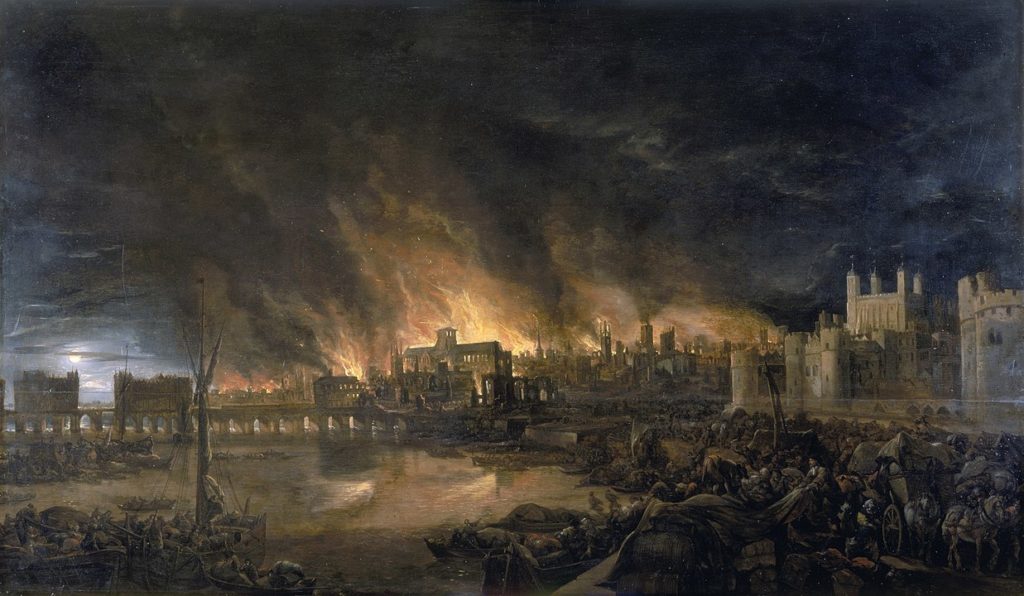
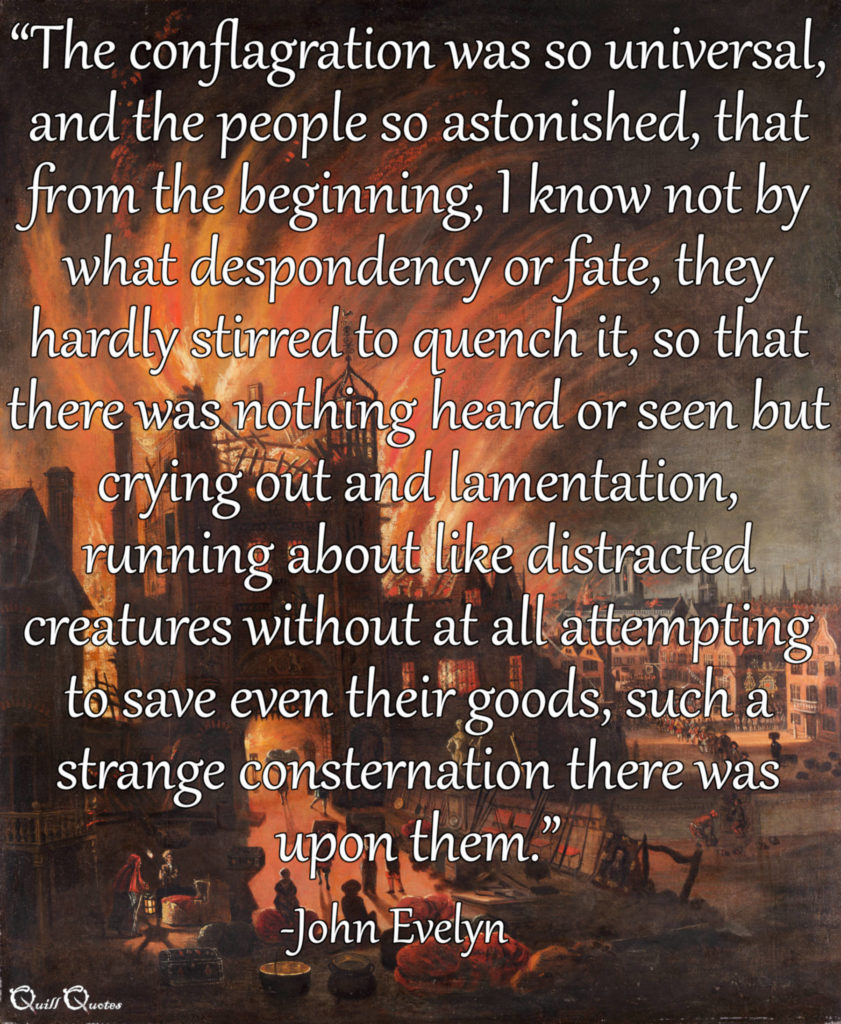
“Lord, what can I do? I am spent: people will not obey me. I have been pulling down houses, but the fire overtakes us faster than we can do it.”
– Sir Thomas Bloodworth, Lord Mayor of London
September 4, 1666, was the worst day of the Great Fire of London that burned more than 80% of Central London, including St Paul’s Cathedral. The fire began at Thomas Farriner’s bakery on Pudding Lane in the early morning of September 2. Initially, Lord Mayor of London Sir Thomas Bloodworth was unwilling to order demolition to create firebreaks, worried about the homeowner’s reaction and cost to rebuild. By the time a direct order came from King Charles II to “spare no houses,” the fire was spreading too quickly to contain. Finally, on September 5th, the strong east winds died down and effective firebreaks were established with the use of gunpowder for demolition, halting the fire’s spread. The widespread destruction was estimated to cost £10 million (£1.66 billion today) and caused at least 8 deaths.
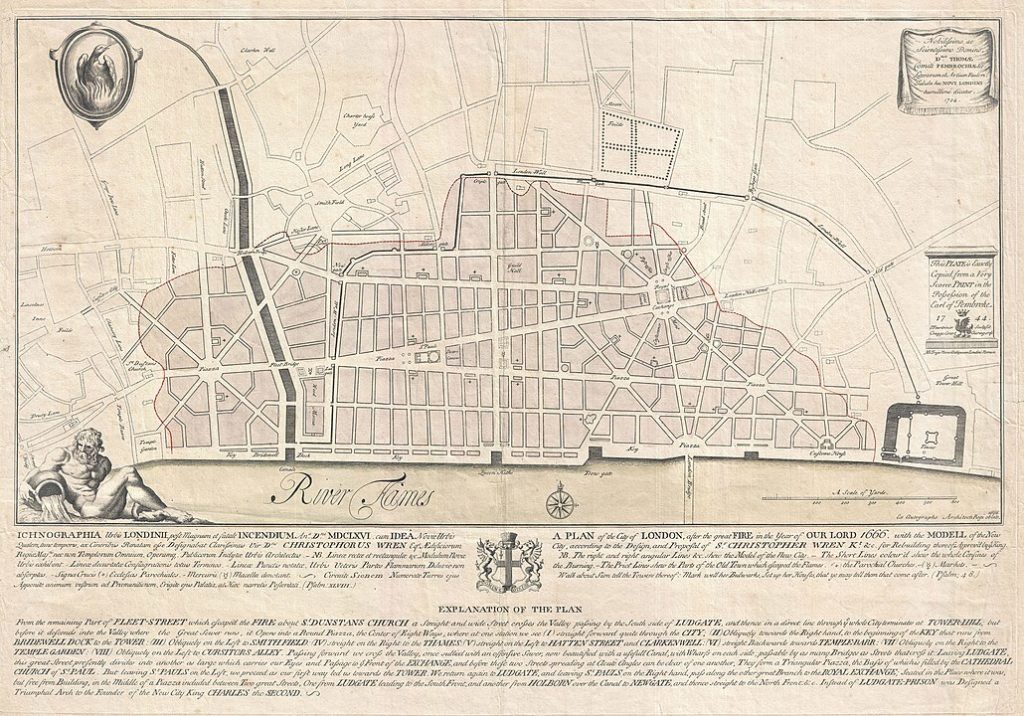
“When the Great Fire of London destroyed most of the medieval city in 1666, Christopher Wren was invited to design a new one. Within days, he had drawn up an elegant grid of broad boulevards leading to majestic squares, but it came to nothing – the existing landowners wanted things as they had been.” -Norman Foster
September 5, 1882
“Labor Day is seen as a day of rest for many hardworking Americans.”
– James P. Hoffa
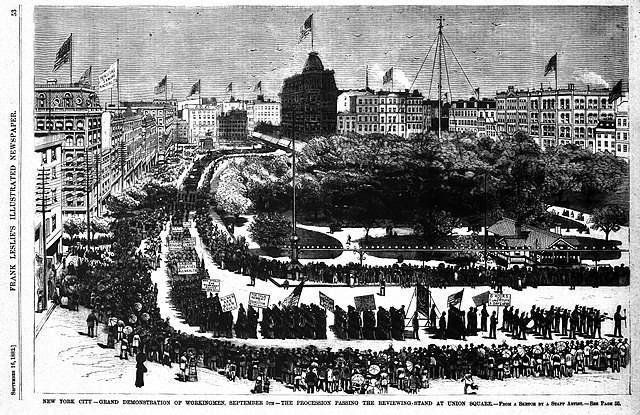
Labor Day was first celebrated on September 5, 1882, with a parade organized by the Central Labor Union (CLU) of New York. Due to the success of the event, Secretary of the CLU Matthew Maguire proposed a national Labor Day holiday be held on the first Monday of each September. Oregon became the first state to make Labor Day an official public holiday in 1887, and it became an official federal holiday in 1894! Labor Day honors the American labor movement and the many contributions workers have made to the development and growth of the country. Outside of the United States and Canada, most countries instead celebrate International Workers’ Day on May 1.
September 6, 1972
“We just got the final word … you know, when I was a kid, my father used to say “Our greatest hopes and our worst fears are seldom realized.” Our worst fears have been realized tonight. They’ve now said that there were eleven hostages. Two were killed in their rooms yesterday morning, nine were killed at the airport tonight. They’re all gone.”
– Jim McKay
On September 6, 1972, a failed rescue attempt resulted in the massacre of 11 Israeli Olympic team members at the 1972 Summer Olympics in Munich, West Germany. They had been taken hostage in the Olympic Village the previous morning by the Palestinian terrorist group Black September. Negotiations took place throughout the day with Black September demanding the release of 234 Palestinians and non-Arabs jailed in Israel, along with two founders of the Red Army Faction jailed in West Germany. Israel took a firm stance against negotiating with terrorists, so West German Police pursued rescue operations. After the terrorists and hostages were transported to a nearby airport, police opened fire. Unfortunately, the remaining Israeli hostages, one police officer, and 5 of the 8 terrorists were killed in the resulting shootout.
September 7, 1901
“Nobody really knows for sure how the Boxer Rebellion started. It began among the poor, and the history of the poor is rarely written down.”
– Gene Luen Yang
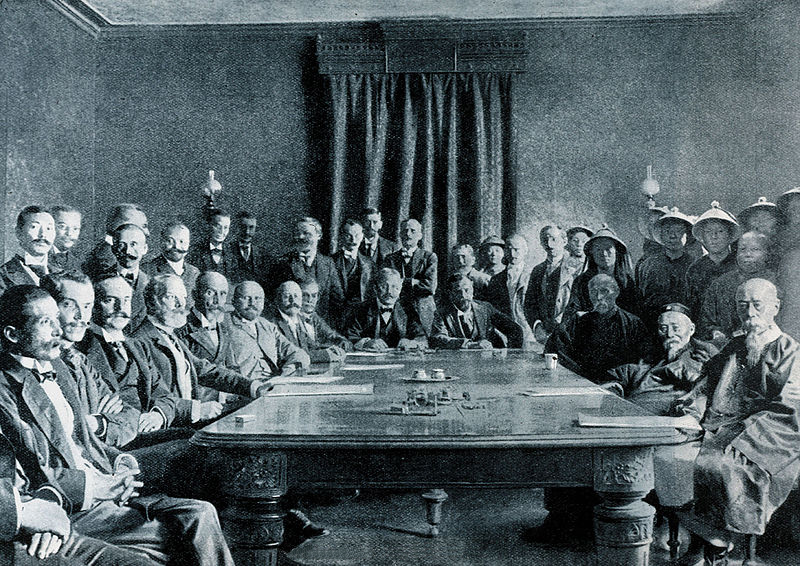
The Boxer Protocol was signed on September 7, 1901, ending the Boxer Rebellion in China. Beginning in 1899, the Boxer Rebellion was an anti-foreign uprising led by the Yihetuan, “Militia United in Righteousness,” known as the Boxers in English. Growing violence and the Boxers attack on foreigners in Beijing in June 1900, prompted 20,000 troops to be sent to China to quell the uprising. After defeating the Boxers and Imperial Army of China at Beijing, the Eight-Nation Alliance, consisting of Austria-Hungary, France, Germany, Italy, Japan, Russia, the United States, and the United Kingdom, negotiated peace with the Qing dynasty. With the interior of China difficult to conquer, the demands of the Eight-Nation Alliance were carefully calculated. Mainly, China agreed to pay 450 million taels of silver (approximately $10 billion today) as indemnity over the next 39 years, split among the eight nations involved.
In case you missed last week’s quotes, see History August 25th – 31st.
To never miss a Quill Quotes post, please subscribe to our free Email Newsletter and follow us on Social Media.
Leave a Reply