There is always much to learn from quotes and their historical significance. Read on for a collection of quotes and general history from August 18th – 24th.
August 18, 1976
“The branches that are cut will be of no use, just as you will be after you die.”
– Pak Chul, North Korean lieutenant
The Korean axe murder incident occurred on August 18, 1976. While trimming a poplar tree blocking the view of UN observers in the Joint Security Area (JSA) of the Korean Demilitarized Zone (DMZ), Captain Arthur Bonifas and team were confronted by about 15 North Korean soldiers led by Senior Lieutenant Pak Chul. Claiming the tree had been planted by Kim Il-Sung, Chul demands the trimming stop. Per protocol, Bonifas ignores the North Korean demands/taunts. Angered, Chul sends for reinforcements and orders an attack shortly after they arrive. Using crowbars, clubs, and the dropped axes from the tree trimmers, both Bonifas and First Lieutenant Mark Barrett are killed. Three days later, Operation Paul Bunyan cut the tree down in a carefully orchestrated show of force which, miraculously, prevented further escalation.
August 19, 1848
“Prudence is not the same thing as caution. Caution is a helpful strategy when you’re crossing a minefield; it’s a disaster when you’re in a gold rush.”
– John Ortberg
On August 19, 1848, the New York Herald reported the discovery of gold in California, becoming the first major East Coast newspaper to do so. The news sparked the California Gold Rush bringing approximately 300,000 people to California from all around the world. With most arriving in 1849, they became collectively known as the “forty-niners.” The huge population growth led to California becoming a state in September 1850. Also, the sudden influx of gold, worth tens of billions of dollars today, greatly boosted the U.S. economy. While a lucky few struck it rich, most of the forty-niners struck out and eventually sought other work.

August 20, 1908
“The hearts of all who saw you thrilled with pride as the hulls of the mighty warships lifted above the horizon.”
– Theodore Roosevelt
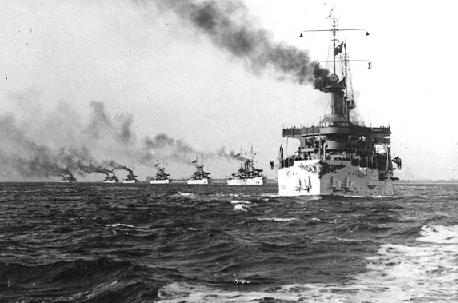
America’s Great White Fleet arrived in Sydney, Australia on August 20, 1908. The Great White Fleet was a U.S. Navy battle fleet, consisting of 16 battleships and various escorts, sent on a journey around the world by President Theodore Roosevelt. The purpose was to display newfound U.S. naval power by making friendly visits to various countries. Not long prior, in the 1880s, the U.S. Navy had consisted of just 90 small ships, more than 30 of them wooden. To protect overseas territory and enforce international treaties, the navy grew considerably during these years. The fleet’s visit to Australia helped create support for the formation of Australia’s own navy.
August 21, 1772
“Ambition and lust for glory on the part of a few people have damaged the realm, and blood has been shed by both parties, and the result of this has been the suffering of the people. The establishment of their own power base has been the sole goal of those ruling, often at the cost of other citizens, and always at the cost of the nation. In times when the law was clear, the law was distorted, and when that was not possible, it was broken. Nothing has been sacred to a populace bent on hatred and revenge, and lunacy has finally reached so far, that it has been assumed that members of parliament are above the law, their not having any other guidance than their own consciences.”
– Gustav III of Sweden
On August 21, 1772, King Gustav III of Sweden completed a bloodless coup d’état with the adoption of a new constitution returning power to the monarchy. Sweden had been ruled by the Riksdag (parliament) for the previous 50 years, known as the country’s Age of Liberty. With widespread corruption and many Riksdag members accepting bribes from foreign powers, the people were quick to support Gustav’s rule. Gustav implemented many reforms typical of Europe’s Age of Enlightenment, such as freedom of the press and a more lenient criminal justice system. Throughout his rule, Gustav continued to gain power from the Riksdag and move Sweden toward an absolute monarchy. This led to growing hatred among the nobility and Gustav’s assassination in 1792.
August 22, 1485
“Not one foot will I fly, so long as breath bides within my breast; for, by Him that shaped both sea and land, this day shall end my battles or my life. I will die King of England.”
– Richard III of England
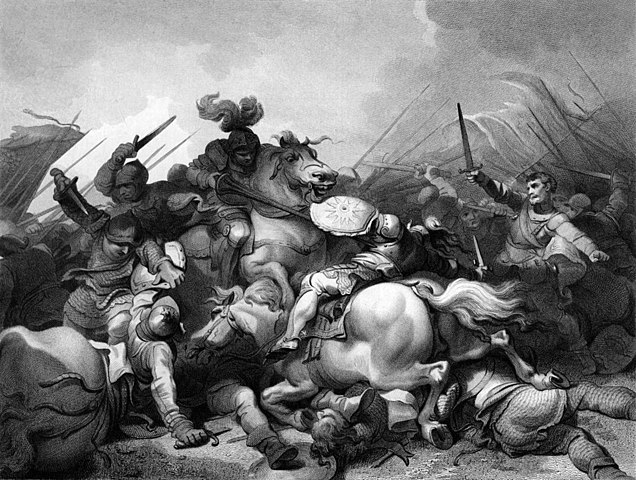
The Battle of Bosworth Field was fought in England on August 22, 1485. This was the last major battle of the War of Roses, the civil war between the Houses of Lancaster and York. Killing King Richard III, the last king of the House of York, the House of Lancaster was victorious. Led by Henry Tudor, the victory marks the beginning of the Tudor dynasty when he was crowned King Henry VII. Richard III remains the last English monarch to die in battle.
August 23, 1305
“To Edward, I cannot be a traitor, for I owe him no allegiance; he is not my sovereign; he never received my homage; and whilst life is in this persecuted body, he shall never receive it.”
– Sir William Wallace
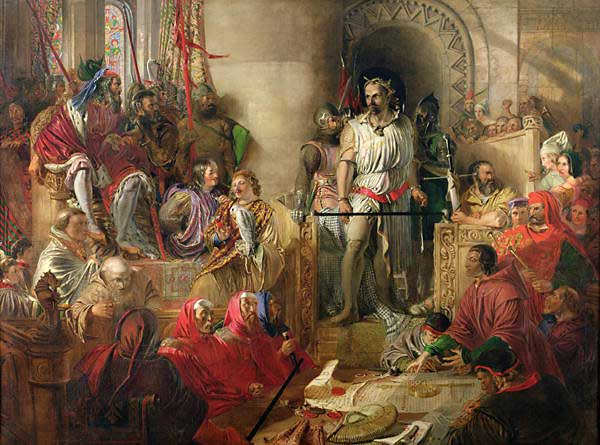
On August 23, 1305, Sir William Wallace was hanged, drawn and quartered for treason. One of the most gruesome execution methods, he was dragged naked by horse from the Tower of London to the Elms at Smithfield where he was hanged to near death, emasculated, eviscerated, beheaded, and cut into four pieces. Wallace was a Scottish knight and one of the main leaders during the First War of Scottish Independence. Wallace’s ambush tactics and strategic use of terrain ran counter to the typical chivalrous and knightly combat of the era. Since his death, Wallace has become an iconic hero and is the subject of the Academy Award-winning film Braveheart.

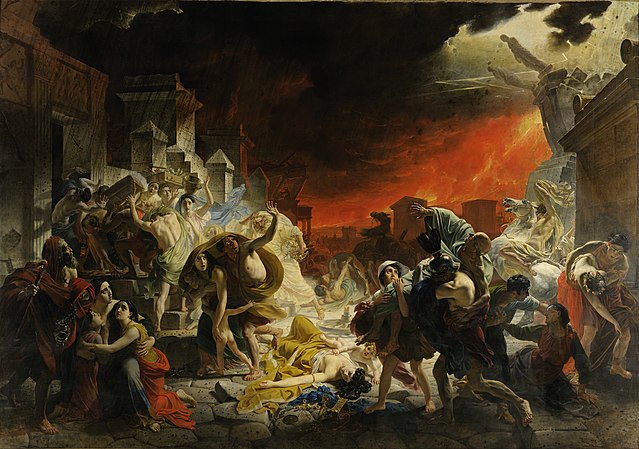
August 24, 79 AD
“In the darkness you could hear the crying of women, the wailing of infants, and the shouting of men. Some prayed for help. Others wished for death. But still more imagined that there were no Gods left, and that the universe was plunged into eternal darkness.”
– Pliny the Younger
On August 24, 79 AD, Mount Vesuvius erupted, burying the Roman cities of Pompeii and Herculaneum. The remains of more than 1,500 people have been found there. However, with a combined population of around 20,000, the total death toll remains unknown. The event is one of the most famous volcanic eruptions in history and forms the namesake of the Vesuvian type eruption, characterized by hot gases and ash exploding into the stratosphere. Pliny the Younger provides the only known eyewitness account of the eruption, from which the date of occurrence is derived. Recently, historians have begun to question whether the date was corrupted during centuries of handwritten transcription, and some hold that the eruption actually occurred in October or November. Mount Vesuvius remains active today and is considered one of the world’s most dangerous volcanoes, being the most densely populated volcanic region with 3 million people.
In case you missed last week’s quotes, see History August 11th – 17th.
To never miss a Quill Quotes post, please subscribe to our free Email Newsletter and follow us on Social Media.
Ooh, these are all great! I love this–history in quotes? Yes!
Thanks! Glad you enjoyed the quotes!